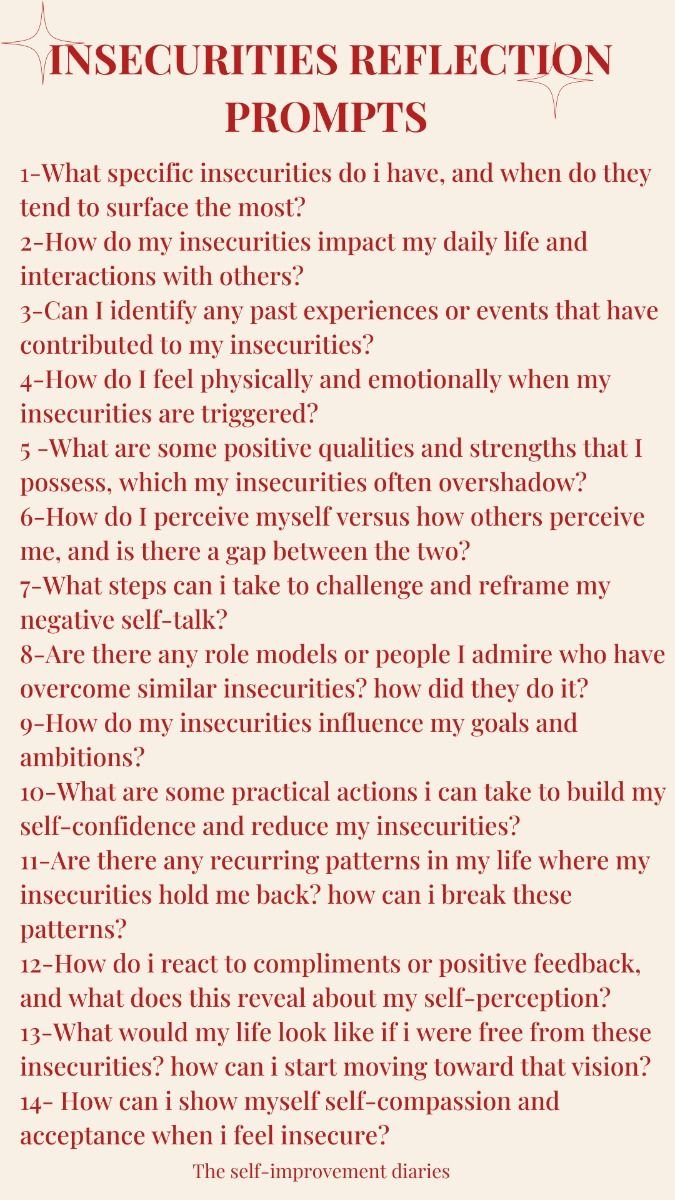
We've all been there: staring at a blank page, or a problem, feeling stuck. The conventional wisdom often points to "journaling," but for many, that just means rehashing the same thoughts or dutifully noting daily events. True breakthroughs—the kind that reshape perspective, unlock solutions, and fuel growth—demand something more. They demand Creativity & Reflection Prompts designed to crack open your thinking, not just document it.
These aren't your grandmother's diary entries. This guide will show you how to leverage potent, often surprising, prompts to move beyond surface-level introspection and into the rich, sometimes uncomfortable, territory where genuine insight resides. We're talking about sparking new narratives for your life, untangling stubborn creative blocks, and charting a future that truly excites you.
At a Glance: Key Takeaways for Deeper Reflection
- Move Beyond the Mundane: Forget generic "what went well?" questions. Effective prompts are specific, evocative, and often a little provocative.
- Embrace Discomfort: The most powerful insights often come from questions that make you squirm. Don't shy away from uncomfortable truths.
- It's Not Just for "Deep Thinkers": Anyone can benefit from reflective writing, regardless of their perceived introspection levels.
- The Brain Benefits: Research shows deep reflective journaling can enhance emotional regulation and self-awareness by activating key brain regions.
- Variety is Your Ally: From year-end summaries as fantasy maps to breaking creative blocks with "ransom notes," diverse prompts yield diverse insights.
- Beware Over-reflection: While beneficial, too much navel-gazing without action can lead to rumination. Balance reflection with concrete next steps.
- Craft Your Own: Learn the components of a powerful prompt to tailor questions that hit your specific emotional edge.
- Leverage Modern Tools: AI and data tracking can augment your reflection practice, but don't underestimate the power of pen and paper.
Why Your Current Reflection Methods Might Be Falling Short
If your attempts at journaling feel more like a chore than a conduit for clarity, you’re not alone. Many conventional prompts are too vague, too safe, or too disconnected from the raw edges of human experience. They often:
- Lack Specificity: Broad questions like "How do you feel?" invite broad, often unhelpful answers.
- Avoid Emotional Risk: They keep you in comfortable territory, never challenging you to confront deeper fears or desires.
- Offer No Challenge: There’s no intellectual or emotional friction, leading to shallow, repetitive thoughts.
- Ignore Lived Realities: They don't connect to your specific triumphs, failures, or unspoken longings.
As thought leader Jordan notes, "Most people think just writing is enough—but it’s the right question that cracks you open." The aim isn't just to write; it's to write in response to a question that demands an honest, sometimes vulnerable, answer.
A Brief History of Looking Inward
Reflective writing isn't a new-age fad; its roots stretch back centuries. Ancient philosophers like Marcus Aurelius used personal journals to clarify values and guide ethical action. Medieval monks kept diaries for spiritual growth, while 19th-century social reformers documented their observations and planned their movements.
In the 20th century, war diaries, protest journals, and later, therapy and self-help movements, further cemented the practice. Prompts have historically been tools for galvanizing courage, integrating trauma, and fostering personal transformation. Today, with digital apps and AI-guided prompts, the practice has become more accessible than ever, democratizing the path to self-understanding.
The Science Behind the Breakthrough
It's not just "feel-good" advice; there's real neuroscience at play. Brain-imaging research demonstrates that reflective journaling literally changes how your brain processes emotion and memory. When you engage with deep, evocative prompts, you activate the prefrontal cortex—the hub of executive function and decision-making—and the limbic system, which governs emotion.
This leads to higher emotional regulation and self-awareness than non-reflective writing. Provocative prompts, in particular, can trigger the amygdala (involved in processing fear and strong emotions) and reward centers, fostering catharsis or sparking a sudden flash of insight. It’s like giving your brain a targeted workout for emotional intelligence and creative problem-solving.
Beyond the Blank Page: Defining Key Terms
To effectively navigate this landscape, let's clarify a few terms:
- Reflective Writing: The act of examining your thoughts, emotions, or behaviors through narrative writing, typically for personal growth or healing. Example: "Describe the last time you felt truly seen."
- Creative Prompt: A thought-provoking starting point for self-exploration, designed to trigger new insights or creative output by moving beyond literal thinking. Example: "Write a love letter to your oldest fear."
- Meta-Prompt: A prompt about prompts, encouraging you to analyze the impact or effectiveness of specific questions. Example: "Reflect on which prompt this week made you most uncomfortable—and why."
The Good, the Bad, and the Ugly: Benefits & Risks of Deep Reflection
While the benefits are significant, it's crucial to approach deep reflection with awareness.
The Upsides: A Wealth of Wellness
Engaging with thoughtful Creativity & Reflection Prompts offers a robust suite of psychological benefits:
- Improved Mood & Resilience: Consistent reflection can help you process emotions and bounce back from adversity.
- Enhanced Immune Function: Studies suggest a link between expressive writing and physical health improvements.
- Trauma Processing: Safe, guided reflection can aid in integrating past traumatic experiences.
- Value Clarification: Pinpoint what truly matters to you, aligning your actions with your core beliefs.
- Empathy Development: Understanding your own emotional landscape often enhances your ability to empathize with others.
- Behavioral Change: By recognizing patterns, you can consciously choose new, more constructive behaviors.
- Narrative Flexibility: Rewrite your personal story, moving from fixed narratives to empowered possibilities.
The Downsides: When to Pull Back
Like any powerful tool, reflection can be misused. Excessive introspection or poorly designed prompts can sometimes lead to:
- Rumination: Getting stuck in a loop of negative thoughts without finding resolution or moving forward.
- Emotional Flooding: Becoming overwhelmed by intense emotions without the tools or support to process them safely.
- Self-Absorption: An unhealthy, exclusive focus on the self that neglects external realities or relationships.
Signs you might be digging too deep: Increased anxiety, difficulty with daily tasks, obsessive focus on a single issue, or a feeling of despair rather than clarity after writing. If you experience these, it's a signal to take a break, try lighter prompts, or seek external support.
Prompts for Every Purpose: Unlocking Specific Breakthroughs
Different challenges call for different questions. Here’s a curated collection of Creativity & Reflection Prompts categorized by their power to address specific needs.
Breaking Creative Blocks
Stuck on a project? Feeling uninspired? These prompts are designed to jolt your inner artist, writer, or problem-solver back to life.
- Write a letter to your resistance. What is it afraid of? What does it want to protect?
- Invent a fictional villain for your inner critic. Give it a name, a backstory, and a weakness.
- Describe a time you failed spectacularly—and what grew out of the wreckage. Focus on the unexpected sprouts, not just the ashes.
- Write your next journal entry as a ransom note from your creative self. What demands does it make? What will happen if they're not met?
- Jot down three "impossible" ideas for your current project or challenge. Now, choose one and make it plausible with just one tiny, actionable step.
- Compose a weather report for your current mindset. Is it foggy with a chance of breakthroughs? Stormy with underlying warmth?
- Finish this sentence: "If I didn’t care what anyone thought, I would…"
Radical Self-Discovery: Provocative Prompts for Unearthing Truths
These aren't for the faint of heart. They're designed to challenge your assumptions, confront your shadow, and reveal parts of yourself you might keep hidden.
- Write a manifesto for your unapologetic self. What are your non-negotiables? What do you stand for, without compromise?
- Describe your inner world as a dystopian city. What are its rules? Who are its inhabitants? What rebellion is simmering?
- What lie do you tell yourself most often—and why? Explore the comfort or perceived protection it offers.
- Recount a moment when you betrayed your own values. What was the cost? What did you learn?
- What’s the scariest thing you’ve never said out loud? Write it down now, even if it's just for your eyes.
- Imagine your life as a banned book; what content would censors want to cut? Why is that content so threatening?
- If you had to relive one regret, what would you do differently? Focus on the action, not just the emotion.
- Describe a secret ambition you’ve never pursued and the fear holding you back. Is the fear protecting you or limiting you?
- Write about a time you were the villain in someone else’s story. How would they tell it? What was your part?
- Invent a ritual for letting go of your oldest wound. Describe it in detail, step by step.
Emotional Processing: Making Sense of Your Inner World
Emotions can be messy. These prompts help you catalogue, understand, and integrate your feelings, fostering emotional intelligence.
- Catalogue every feeling you’ve had today—without judgment. Just list them.
- Describe the last time you felt invisible; what triggered it? What did that feeling make you want to do?
- Write to your anger as if it’s a misunderstood friend. What does it need you to know? What is its deeper message?
- List three emotional patterns you repeat; where do they originate? Trace them back as far as you can remember.
- Journal about a time you received empathy; how did it change you? What did it feel like to be truly understood?
- Explore a moment you disappointed someone; what emotions still linger? Can you offer yourself compassion for that moment?
- Write about when you suppressed a strong feeling; what was the cost? What happened when it inevitably resurfaced?
- Describe a recent emotional high—what made it possible? What ingredients contributed to that joy or fulfillment?
- Invent a metaphor for your emotional life this month. Is it a turbulent ocean, a quiet forest, a bustling city?
Future Vision and Goal Setting: Charting Your Path Forward
Reflection isn't just about the past; it's a powerful tool for shaping your future. These prompts help you clarify desires and align actions.
- Imagine yourself five years from now—what have you let go of that you once clung to? What wisdom did letting go bring?
- Describe the version of you who reaches your wildest dream; what sacrifices did they make? What qualities did they cultivate?
- List three risks you’d take if fear was off the table. Choose one and outline the absolute smallest step you could take today.
- Write a eulogy for your future self—what do you hope is said? What legacy do you want to leave behind?
- Invent a ritual for celebrating small wins, and plan your next one. How will you honor your progress?
- Describe the world you want to live in; what’s your role in creating it? What unique contribution can you make?
- Map out your emotional goals for the next year; how will you measure growth? (e.g., "Feel less anxious in social settings," "Express gratitude daily").
- Journal about a goal that no longer excites you; why did it lose its spark? Is it time to let it go or redefine it?
Year-End Reflection: Creative Ways to Summarize Your Journey
Moving beyond "what went well?" these creative prompts offer novel ways to synthesize a period of time, like a year. They're great for those who dislike long-form journaling or want a fresh perspective.
- Custom Wrapped playlist: Curate a theme song for each month related to personal activities or feelings.
- Chapter titles for the book of your year: Frame the year as a book, identifying significant events, "plotlines," and personal transformation.
- Color for each month: Select a color to represent each month's mood, emotion, places visited, or outfits worn.
- Scent for each month: Assign a scent based on changing seasons, activities, food, travel, or personal fragrance choices.
- Doodle key events or memories: Create visual representations for each month, either literal illustrations or abstract patterns.
- Collage or single scrapbook spread: Create a one-off collage on paper as a visual summary of the year.
- Curate the year in memes: Choose a meme for each month or key event that sums up the period or happened during it.
- Quote of the month: Find a quote (from any source) to represent each month or significant memory.
- Plot your own fantasy map: "Geographically" represent the year's themes, events, or emotions on a personal fantasy map.
- Emoji of the month: Select an emoji (face or object) that represents each month.
- Headline of the month: Write personal headlines for each month or choose actual news headlines that resonated.
- Metaphorical meteorological report: Describe each month or season using weather metaphors to represent emotional or situational states.
- Food or flavor of the month: Pick a flavor, ingredient, food, or meal based on actual consumption, seasonality, or associated emotions/moods.
- Fashion item of the month: Select an outfit, accessory, or fabric type to represent each month, based on actual wear, ideal attire for events, or emotional associations.
You can even combine these for themed reflections, such as "The Word Nerd Reflection" (Chapter titles, Quote, Headline, Meteorological report) or "The Sensory Reflection" (Scent, Meteorological report, Food, Fashion item).
Crafting Your Own Breakthrough Prompts
The most powerful prompts are often those you design for yourself. They leverage your unique emotional landscape and current challenges. Powerful prompts blend five components: an emotional trigger, specificity, a challenge level, personal context, and a universal theme.
Here’s a 6-step process to build your own:
- Identify Your Emotional Edge: What feeling is currently prominent for you? (e.g., frustration, longing, fear, excitement).
- Name a Recent Event: Pinpoint a specific recent situation or interaction tied to that emotion.
- Choose an Action/Decision: What did you do, or not do, in that event?
- Add a Challenging Twist: Introduce a "what if," a reversal, or an unexpected perspective.
- Frame it as a Direct Question: Turn it into a clear, concise query.
- Test Its Power: Does it make you a little uncomfortable? Does it immediately spark an idea or feeling? If so, you're on the right track. As Riley reminds us, "The best prompts make you uncomfortable, not just busy."
Common Mistakes to Avoid: Overcomplicating, being too abstract, ignoring your true emotional triggers, lacking a challenge, focusing only on the past, omitting personal context, and writing for an imaginary audience instead of yourself.
Real-World Impact: When Prompts Spark Change
These aren't just academic exercises. People are using Creativity & Reflection Prompts to navigate significant personal and professional shifts.
- Mia, an artist, was creatively blocked. Using the prompt "Invent a fictional villain for your inner critic," she uncovered a childhood fear of judgment. This insight freed her to create new, riskier art, culminating in a successful exhibition.
- Sam found self-forgiveness after a "villain in someone else's story" prompt.
- Jess broke free from external expectations by writing a "manifesto for her unapologetic self."
- Morgan used emotional processing prompts to find language for her anxiety, making it feel less overwhelming.
- Lee, in group therapy, realized shared struggles when prompted to explore "when they felt invisible."
These anecdotes underscore the transformative power of the right question at the right time.
Going Deeper: Advanced Strategies for Reflection
Leveraging AI-Powered Journaling
The digital age offers new tools for introspection. Platforms like mirrormind.ai analyze your emotional patterns and offer tailored prompts, accelerating insight by spotting blind spots you might miss. While helpful, be mindful of the risks: overreliance on algorithms and generic AI prompts can sometimes dilute the raw, personal connection. Use AI as a guide, not a replacement for your own inner wisdom.
Data-Driven Reflection: Tracking Your Inner Landscape
You can bring a data-driven approach to your reflection. By tracking responses over time—e.g., Mood Trends, Insight Frequency, Creative Breakthroughs—you can reveal emotional cycles, identify triggers, and monitor your progress. Use this data as a mirror for guidance, helping you understand your inner shifts, not as a tool for judgment.
Beyond the Journal: Expanding the Reach of Prompts
Creativity & Reflection Prompts aren't confined to a private journal. Their power extends into various facets of life:
- In the Classroom: Educators use prompts like "Describe a time you challenged a rule" or "Write from the perspective of someone you disagree with" to foster critical thinking and empathy. Reports show up to a 30% increase in student participation and deeper engagement.
- Therapy and Coaching: Prompts are central to therapeutic breakthroughs. A structured approach involves setting context, selecting appropriate prompts, guiding the writing process, and facilitating discussion to plan next steps.
- Creative Arts: Artists use prompts like "Ekphrasis" (writing vividly describing a piece of art) or "Stream-of-consciousness" (unfiltered writing) to overcome blocks, explore themes, and find deeper meaning in their work. For those looking for diverse inspiration, you might explore the random quote generator to kickstart a new creative project.
Addressing the Elephant in the Room: The "Navel-Gazing" Myth
A common misconception is that reflective writing leads to self-indulgent navel-gazing. The truth is often the opposite. Deep personal reflection correlates with:
- Increased activism and ethical decision-making.
- Greater resilience in the face of adversity.
- Improved conflict resolution skills.
- Empowered career pivots.
- Healing relationships and building stronger communities.
- Boosted creativity and innovation.
Healthy reflection leads to relief, clarity, and action. Unhealthy reflection, as discussed earlier, often results in increased anxiety, despair, and little real-world change. To avoid this, set time limits, alternate reflective sessions with action-oriented exercises, and actively seek outside perspectives from trusted friends, mentors, or therapists.
Making It Stick: Building a Sustainable Reflection Habit
Consistency, reward, and flexibility are the pillars of a lasting reflection practice.
Steps for a Routine That Works
- Set a Regular Time & Place: Even 10-15 minutes daily can make a difference.
- Start with Micro-Prompts: Don't feel pressured to write a novel. A single sentence or bullet point is enough.
- Track Your Streak: Seeing your progress can be highly motivating.
- Pair with Other Habits: Link it to your morning coffee, evening wind-down, or another established routine.
- Reward Small Wins: Treat yourself—a favorite coffee for a week of writing, a new pen for a month.
- Alternate Prompt Types: Keep it fresh by varying between creative, emotional, and goal-oriented prompts.
- Join a Community: Share insights (anonymously if preferred) in a group or online forum for accountability and diverse perspectives.
- Allow for Breaks: Life happens. Don't let a missed day derail your entire practice. Simply pick it back up.
Troubleshooting Common Obstacles
- "I don't know what to write!" Try a visual prompt, doodle, or start with "I don't know, but..."
- Boredom with prompts: Change your writing medium (pen/paper, voice-to-text, digital), write in a different location, or use prompts from an entirely different discipline (e.g., a science-fiction prompt for a personal issue).
- Perfectionism: Set a timer for "bad" writing—give yourself permission to write terribly for five minutes.
- Feeling too self-conscious: Write as if you are someone else—an ancient philosopher, a futuristic AI, or a fictional character.
- Stuck on a topic: Start with a quote, a photo, or an object in your room and riff on it.
- Want fresh perspectives? Remix old journal entries by rewriting them from a different emotional state or a different character's perspective.
Connecting the Dots: Adjacent Practices for Enhanced Reflection
Your reflection practice doesn't exist in a vacuum. It thrives when supported by other mindful habits:
- Mindfulness and Meditation: Practices like body scans, mindful breathwork, and non-judgmental observation enhance reflection by calming the nervous system and sharpening your ability to notice subtle inner shifts. Gratitude journaling, another mindful practice, can also bring valuable perspective.
- Community: Group journaling, workshops, and online forums provide connection, accountability, and a safe space to share. Always ensure clear guidelines for confidentiality and respect.
- Technology: As mentioned, apps offer personalization and pattern recognition. However, the tactile nature of analog journaling often provides a deeper, less distracted experience. The most effective approach often combines the best of both worlds.
Your Next Step: Embrace the Disruption
The future of creative reflective writing prompts lies in embracing their disruptive power. They aren't meant to simply confirm what you already know, but to challenge and rebuild your inner narratives, leading you to places you might never have explored otherwise.
So, where do you start? Start with the question you’re most afraid to answer. That’s where the real magic happens. That's where you'll spark genuine breakthroughs and transform your self-story.